Show Notes
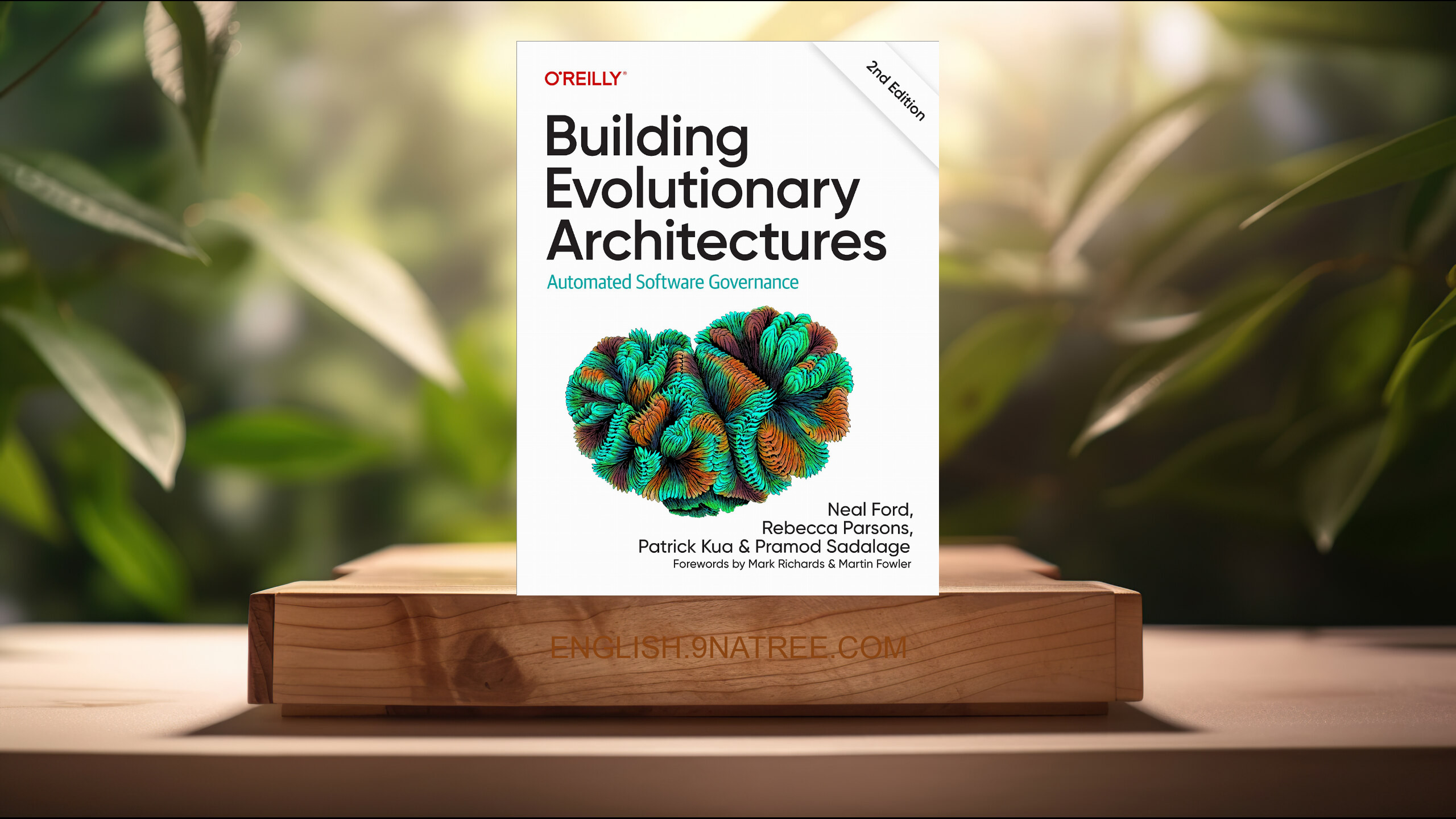
Building Evolutionary Architectures: Automated Software Governance (Neal Ford)
- Amazon USA Store: https://www.amazon.com/dp/1492097543?tag=9natree-20
- Amazon Worldwide Store: https://global.buys.trade/Building-Evolutionary-Architectures%3A-Automated-Software-Governance-Neal-Ford.html
- Apple Books: https://books.apple.com/us/audiobook/the-war-of-all-against-all-the-hobbes-trap-unabridged/id6788025187?itsct=books_box_link&itscg=30200&ls=1&at=1001l3bAw&ct=9natree
- eBay: https://www.ebay.com/sch/i.html?_nkw=Building+Evolutionary+Architectures+Automated+Software+Governance+Neal+Ford+&mkcid=1&mkrid=711-53200-19255-0&siteid=0&campid=5339060787&customid=9natree&toolid=10001&mkevt=1
- Read more: https://english.9natree.com/read/1492097543/
#Architecturalfitnessfunctions #Incrementalchangeengineering #Automatedarchitecturegovernance #Couplinganalysis #Evolutionarydatabasemigrations #BuildingEvolutionaryArchitectures
Building Evolutionary Architectures: Automated Software Governance is a practical software architecture book by Neal Ford, Rebecca Parsons, Patrick Kua, and Pramod Sadalage. The second edition develops the idea that architecture is not a one-time design artifact but an ongoing discipline for enabling safe change. Its subject is the design and governance of systems whose business requirements, technologies, data models, and operating conditions will inevitably shift. Rather than promising that teams can predict every future need, the book explains how to establish technical boundaries and feedback mechanisms that let systems adapt without silently losing critical qualities. Its central definition of evolutionary architecture emphasizes guided, incremental change across multiple dimensions. The book is aimed at architects, senior developers, and delivery leaders working with continuous delivery, distributed systems, or legacy modernization. It combines conceptual guidance with practices for automated architectural governance, including fitness functions, coupling analysis, deployment pipelines, and incremental migration techniques. The focus is therefore not a preferred architecture style, but a repeatable way to assess, protect, and deliberately evolve any chosen style.