Show Notes
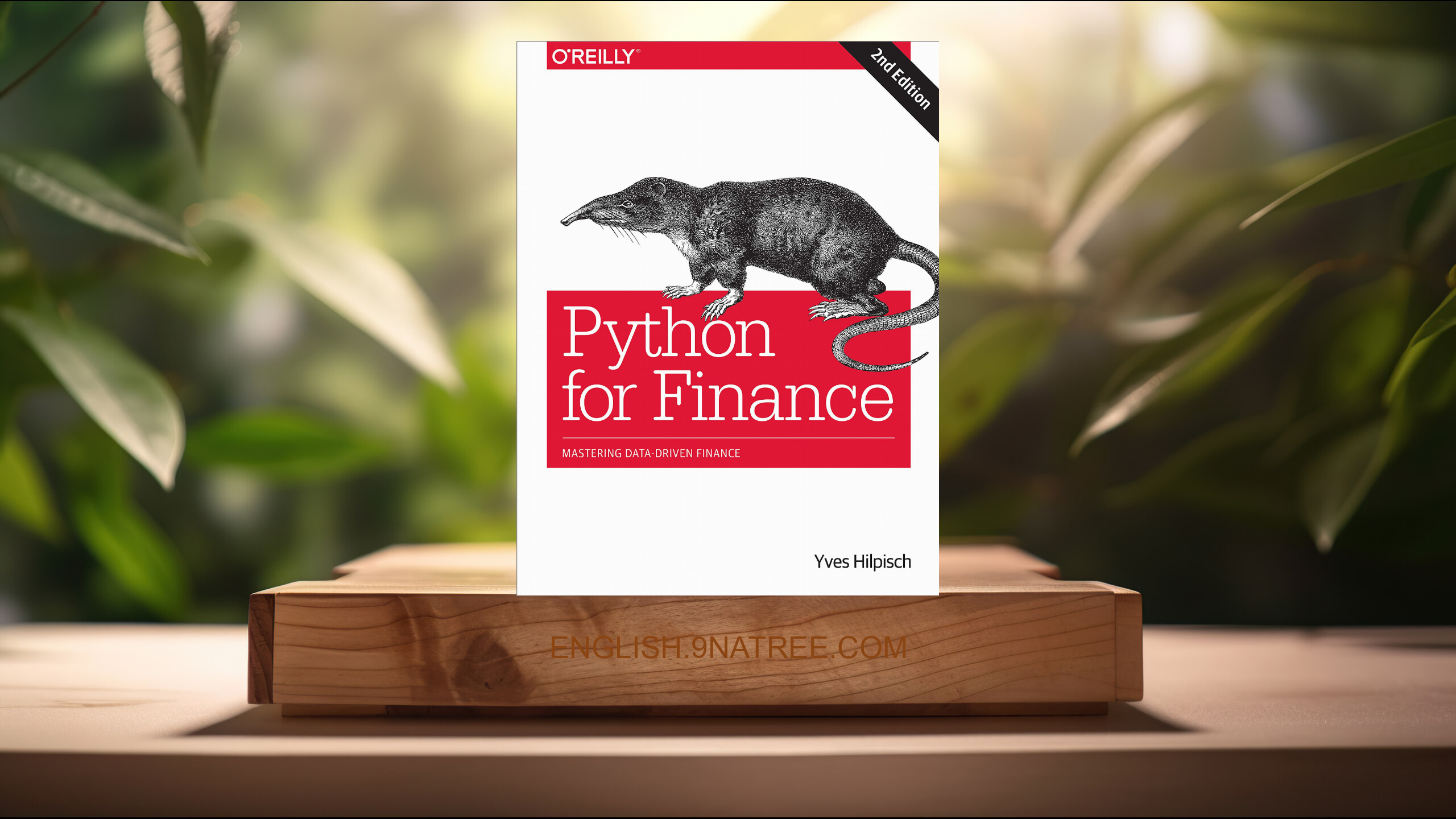
Python for Finance: Mastering Data-Driven Finance (Yves Hilpisch)
- Amazon USA Store: https://www.amazon.com/dp/1492024333?tag=9natree-20
- Amazon Worldwide Store: https://global.buys.trade/Python-for-Finance%3A-Mastering-Data-Driven-Finance-Yves-Hilpisch.html
- Apple Books: https://books.apple.com/us/audiobook/python-for-effect-master-data-visualization-and/id1783356592?itsct=books_box_link&itscg=30200&ls=1&at=1001l3bAw&ct=9natree
- eBay: https://www.ebay.com/sch/i.html?_nkw=Python+for+Finance+Mastering+Data+Driven+Finance+Yves+Hilpisch+&mkcid=1&mkrid=711-53200-19255-0&siteid=0&campid=5339060787&customid=9natree&toolid=10001&mkevt=1
- Read more: https://english.9natree.com/read/1492024333/
#ScientificPythonecosystem #Financialtimeseriesanalysis #Vectorizednumericalcomputing #MonteCarloderivativesvaluation #Quantitativeanalyticsframework #PythonforFinance
Python for Finance: Mastering Data-Driven Finance, Second Edition is a technical, hands-on guide to applying Python in quantitative finance, financial data analysis, and derivatives valuation. Written by Yves Hilpisch and updated for Python 3, it combines an introduction to the language and its scientific ecosystem with finance-centered implementations. Its purpose is not simply to teach programming syntax or summarize financial theory in isolation. Instead, it shows how numerical tools, data structures, visualization, time-series analysis, simulation, and performance techniques can be combined in practical analytical workflows. A major thread is the construction of a reusable framework for Monte Carlo based derivatives and risk analytics, developed through a substantial case study. Interactive Jupyter notebooks are central to the presentation, allowing readers to inspect data, run experiments, alter assumptions, and compare results. The book therefore occupies a useful middle ground between introductory Python texts, narrowly focused trading books, and mathematically specialized derivatives references.