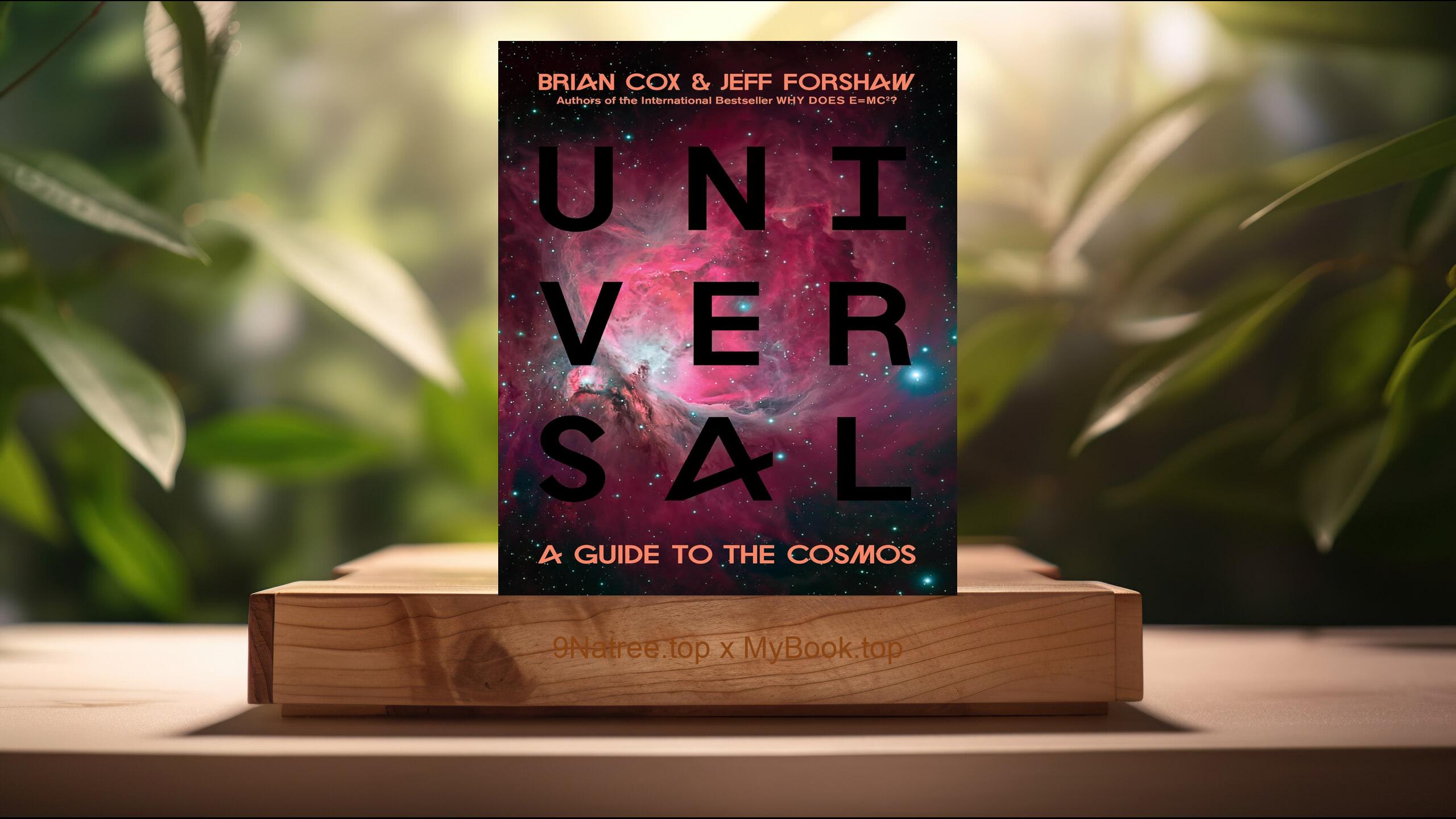
![[Review] To Infinity and Beyond: A Journey of Cosmic Discovery (Neil Tyson) Summarized](https://episodes.castos.com/660078c6833215-59505987/images/2368919/c1a-085k3-8d0vpx5nfw96-kpo1xv.jpg)
Show Notes
To Infinity and Beyond: A Journey of Cosmic Discovery (Neil Tyson)
- Amazon USA Store: https://www.amazon.com/dp/B0BWLMH4D7?tag=9natree-20
- Amazon Worldwide Store: https://global.buys.trade/To-Infinity-and-Beyond%3A-A-Journey-of-Cosmic-Discovery-Neil-Tyson.html
- Apple Books: https://books.apple.com/us/audiobook/cosmic-journey-exploring-the-boundaries-of-the-universe/id1703804076?itsct=books_box_link&itscg=30200&ls=1&at=1001l3bAw&ct=9natree
- eBay: https://www.ebay.com/sch/i.html?_nkw=To+Infinity+and+Beyond+A+Journey+of+Cosmic+Discovery+Neil+Tyson+&mkcid=1&mkrid=711-53200-19255-0&siteid=0&campid=5339060787&customid=9natree&toolid=10001&mkevt=1
- Read more: https://english.9natree.com/read/B0BWLMH4D7/
#cosmology #astronomy #blackholes #starsandgalaxies #scientificthinking #universeexpansion #spacescience #ToInfinityandBeyond
These are takeaways from this book.
Firstly, Cosmic Scale: Learning to Think in Light Years and Deep Time, A central theme is recalibrating intuition for a universe that dwarfs everyday experience. The book emphasizes that distance in space is also distance in time, because light takes time to travel. Looking at the Moon shows a world as it was a little over a second ago, while looking at galaxies can reveal them as they were millions or billions of years in the past. This perspective turns astronomy into a kind of time travel, where telescopes act as historical instruments as much as visual ones. The discussion typically grounds these ideas with comparisons that help readers grasp orders of magnitude: planets versus stars, solar systems versus galaxies, and galaxies within the larger structure of clusters and the cosmic web. Deep time also reframes Earth history, placing human civilization into a thin slice of the cosmic calendar. This topic matters because it sets the foundation for everything else: star lifecycles, cosmic evolution, and the search for life all rely on understanding scale. By making scale vivid, the book helps readers replace vague awe with informed wonder and a practical mental toolkit for following modern space science news.
Secondly, Stellar Life Cycles: How Stars Forge the Ingredients of Worlds, The book explores stars as engines that turn simple beginnings into complexity. Stars form when gravity gathers gas and dust until pressures and temperatures ignite nuclear fusion, releasing energy that can balance the inward pull of gravity for vast periods. Over time, a star’s mass largely determines its fate, shaping how it shines, how long it lives, and how it dies. Lower mass stars can burn steadily for extremely long lifetimes, while high mass stars live fast and end dramatically. These endings are not merely fireworks; they are chemical factories and delivery systems. Heavier elements required for rocky planets, oceans, and biology are produced in stellar interiors and in violent stellar deaths, then scattered into space to seed new generations of stars and planets. This connects cosmic evolution to personal existence, emphasizing that the materials of everyday life originate in ancient astrophysical processes. The topic also explains why astronomers care about spectra, brightness, and stellar motion, because these measurements reveal composition, temperature, and age. Understanding stellar life cycles provides a framework for grasping supernovae, neutron stars, black holes, and the conditions that make habitable planets possible.
Thirdly, Galaxies and the Evolving Universe: Expansion, Structure, and Origins, Moving beyond individual stars, the narrative expands to galaxies as the main habitats of stellar populations and the building blocks of cosmic structure. Readers are guided through how galaxies form and change through gravity, mergers, and the ongoing recycling of gas into new stars. The book also highlights the expanding universe, an idea supported by observations that distant galaxies show systematic shifts in their light. Expansion leads naturally to questions about beginnings, such as the early hot dense phase commonly described as the Big Bang framework, and about how early tiny variations grew into the large scale structure seen today. This topic stresses that cosmology is evidence driven: background radiation, galaxy distributions, and measurements of chemical abundances all interlock to constrain models. The evolution of the universe is presented as a narrative with chapters rather than a single event, from the first light to the assembly of galaxies and the emergence of heavy elements. By focusing on structure and change, the book helps readers see the cosmos as dynamic and interpretable rather than static mystery, and it clarifies why new instruments and surveys can transform our understanding.
Fourthly, Gravity, Relativity, and Black Holes: When Physics Meets Extremes, A major portion of any cosmic overview is the role of gravity, the force that shapes orbits, holds galaxies together, and governs the behavior of the universe at the largest scales. The book typically distinguishes everyday gravity from the deeper description offered by relativity, where mass and energy influence the geometry of spacetime. This shift in viewpoint helps explain phenomena that cannot be captured by simple intuition, such as time dilation, gravitational lensing, and the behavior of objects near extremely dense regions. Black holes become the flagship example: not simply cosmic vacuums, but regions where gravity is so intense that escape becomes impossible once a boundary is crossed. The topic often connects black holes to stellar evolution and to galactic centers, where supermassive black holes influence their surroundings through accretion and energetic outflows. It also highlights how scientists infer black holes indirectly, using the motion of stars, high energy emissions, and more recently, observations of gravitational waves and horizon scale images. By presenting gravity as both familiar and profoundly strange, the book equips readers to understand why extreme objects are central to modern astrophysics.
Lastly, The Scientific Mindset: How We Know What We Know About Space, Beyond facts about planets and galaxies, the book emphasizes method: how reliable knowledge is extracted from faint signals across enormous distances. It explains the importance of measurement, uncertainty, and cross checking, showing that scientific conclusions are not mere opinions but the result of disciplined inference. Telescopes gather light, but meaning comes from interpreting that light through tools such as spectroscopy, imaging, and statistical analysis. Models play a key role, yet they remain provisional, improving as observations sharpen. This topic also explores why misconceptions spread easily in space science, because the scales are counterintuitive and the imagery can invite overinterpretation. The book encourages readers to appreciate the difference between what is known, what is strongly suggested, and what remains open. It also addresses the human side of discovery: curiosity, competition, collaboration, and the way technology expands what can be tested. By foregrounding process, the narrative helps readers become better consumers of science communication, more resistant to sensational claims, and more confident in asking good questions. The result is not only a guide to the cosmos but also a guide to thinking clearly about complex topics.
- Amazon USA Store: https://www.amazon.com/dp/B0BWLMH4D7?tag=9natree-20
- Amazon Worldwide Store: https://global.buys.trade/To-Infinity-and-Beyond%3A-A-Journey-of-Cosmic-Discovery-Neil-Tyson.html
- Apple Books: https://books.apple.com/us/audiobook/cosmic-journey-exploring-the-boundaries-of-the-universe/id1703804076?itsct=books_box_link&itscg=30200&ls=1&at=1001l3bAw&ct=9natree
- eBay: https://www.ebay.com/sch/i.html?_nkw=To+Infinity+and+Beyond+A+Journey+of+Cosmic+Discovery+Neil+Tyson+&mkcid=1&mkrid=711-53200-19255-0&siteid=0&campid=5339060787&customid=9natree&toolid=10001&mkevt=1
- Read more: https://english.9natree.com/read/B0BWLMH4D7/
#cosmology #astronomy #blackholes #starsandgalaxies #scientificthinking #universeexpansion #spacescience #ToInfinityandBeyond
These are takeaways from this book.
Firstly, Cosmic Scale: Learning to Think in Light Years and Deep Time, A central theme is recalibrating intuition for a universe that dwarfs everyday experience. The book emphasizes that distance in space is also distance in time, because light takes time to travel. Looking at the Moon shows a world as it was a little over a second ago, while looking at galaxies can reveal them as they were millions or billions of years in the past. This perspective turns astronomy into a kind of time travel, where telescopes act as historical instruments as much as visual ones. The discussion typically grounds these ideas with comparisons that help readers grasp orders of magnitude: planets versus stars, solar systems versus galaxies, and galaxies within the larger structure of clusters and the cosmic web. Deep time also reframes Earth history, placing human civilization into a thin slice of the cosmic calendar. This topic matters because it sets the foundation for everything else: star lifecycles, cosmic evolution, and the search for life all rely on understanding scale. By making scale vivid, the book helps readers replace vague awe with informed wonder and a practical mental toolkit for following modern space science news.
Secondly, Stellar Life Cycles: How Stars Forge the Ingredients of Worlds, The book explores stars as engines that turn simple beginnings into complexity. Stars form when gravity gathers gas and dust until pressures and temperatures ignite nuclear fusion, releasing energy that can balance the inward pull of gravity for vast periods. Over time, a star’s mass largely determines its fate, shaping how it shines, how long it lives, and how it dies. Lower mass stars can burn steadily for extremely long lifetimes, while high mass stars live fast and end dramatically. These endings are not merely fireworks; they are chemical factories and delivery systems. Heavier elements required for rocky planets, oceans, and biology are produced in stellar interiors and in violent stellar deaths, then scattered into space to seed new generations of stars and planets. This connects cosmic evolution to personal existence, emphasizing that the materials of everyday life originate in ancient astrophysical processes. The topic also explains why astronomers care about spectra, brightness, and stellar motion, because these measurements reveal composition, temperature, and age. Understanding stellar life cycles provides a framework for grasping supernovae, neutron stars, black holes, and the conditions that make habitable planets possible.
Thirdly, Galaxies and the Evolving Universe: Expansion, Structure, and Origins, Moving beyond individual stars, the narrative expands to galaxies as the main habitats of stellar populations and the building blocks of cosmic structure. Readers are guided through how galaxies form and change through gravity, mergers, and the ongoing recycling of gas into new stars. The book also highlights the expanding universe, an idea supported by observations that distant galaxies show systematic shifts in their light. Expansion leads naturally to questions about beginnings, such as the early hot dense phase commonly described as the Big Bang framework, and about how early tiny variations grew into the large scale structure seen today. This topic stresses that cosmology is evidence driven: background radiation, galaxy distributions, and measurements of chemical abundances all interlock to constrain models. The evolution of the universe is presented as a narrative with chapters rather than a single event, from the first light to the assembly of galaxies and the emergence of heavy elements. By focusing on structure and change, the book helps readers see the cosmos as dynamic and interpretable rather than static mystery, and it clarifies why new instruments and surveys can transform our understanding.
Fourthly, Gravity, Relativity, and Black Holes: When Physics Meets Extremes, A major portion of any cosmic overview is the role of gravity, the force that shapes orbits, holds galaxies together, and governs the behavior of the universe at the largest scales. The book typically distinguishes everyday gravity from the deeper description offered by relativity, where mass and energy influence the geometry of spacetime. This shift in viewpoint helps explain phenomena that cannot be captured by simple intuition, such as time dilation, gravitational lensing, and the behavior of objects near extremely dense regions. Black holes become the flagship example: not simply cosmic vacuums, but regions where gravity is so intense that escape becomes impossible once a boundary is crossed. The topic often connects black holes to stellar evolution and to galactic centers, where supermassive black holes influence their surroundings through accretion and energetic outflows. It also highlights how scientists infer black holes indirectly, using the motion of stars, high energy emissions, and more recently, observations of gravitational waves and horizon scale images. By presenting gravity as both familiar and profoundly strange, the book equips readers to understand why extreme objects are central to modern astrophysics.
Lastly, The Scientific Mindset: How We Know What We Know About Space, Beyond facts about planets and galaxies, the book emphasizes method: how reliable knowledge is extracted from faint signals across enormous distances. It explains the importance of measurement, uncertainty, and cross checking, showing that scientific conclusions are not mere opinions but the result of disciplined inference. Telescopes gather light, but meaning comes from interpreting that light through tools such as spectroscopy, imaging, and statistical analysis. Models play a key role, yet they remain provisional, improving as observations sharpen. This topic also explores why misconceptions spread easily in space science, because the scales are counterintuitive and the imagery can invite overinterpretation. The book encourages readers to appreciate the difference between what is known, what is strongly suggested, and what remains open. It also addresses the human side of discovery: curiosity, competition, collaboration, and the way technology expands what can be tested. By foregrounding process, the narrative helps readers become better consumers of science communication, more resistant to sensational claims, and more confident in asking good questions. The result is not only a guide to the cosmos but also a guide to thinking clearly about complex topics.