![[Review] Fundamentals of Astrodynamics: Second Edition (Roger R. Bate) Summarized](https://episodes.castos.com/660078c6833215-59505987/images/2352628/c1a-085k3-pkw87jojfjw6-rl722z.jpg)
Show Notes
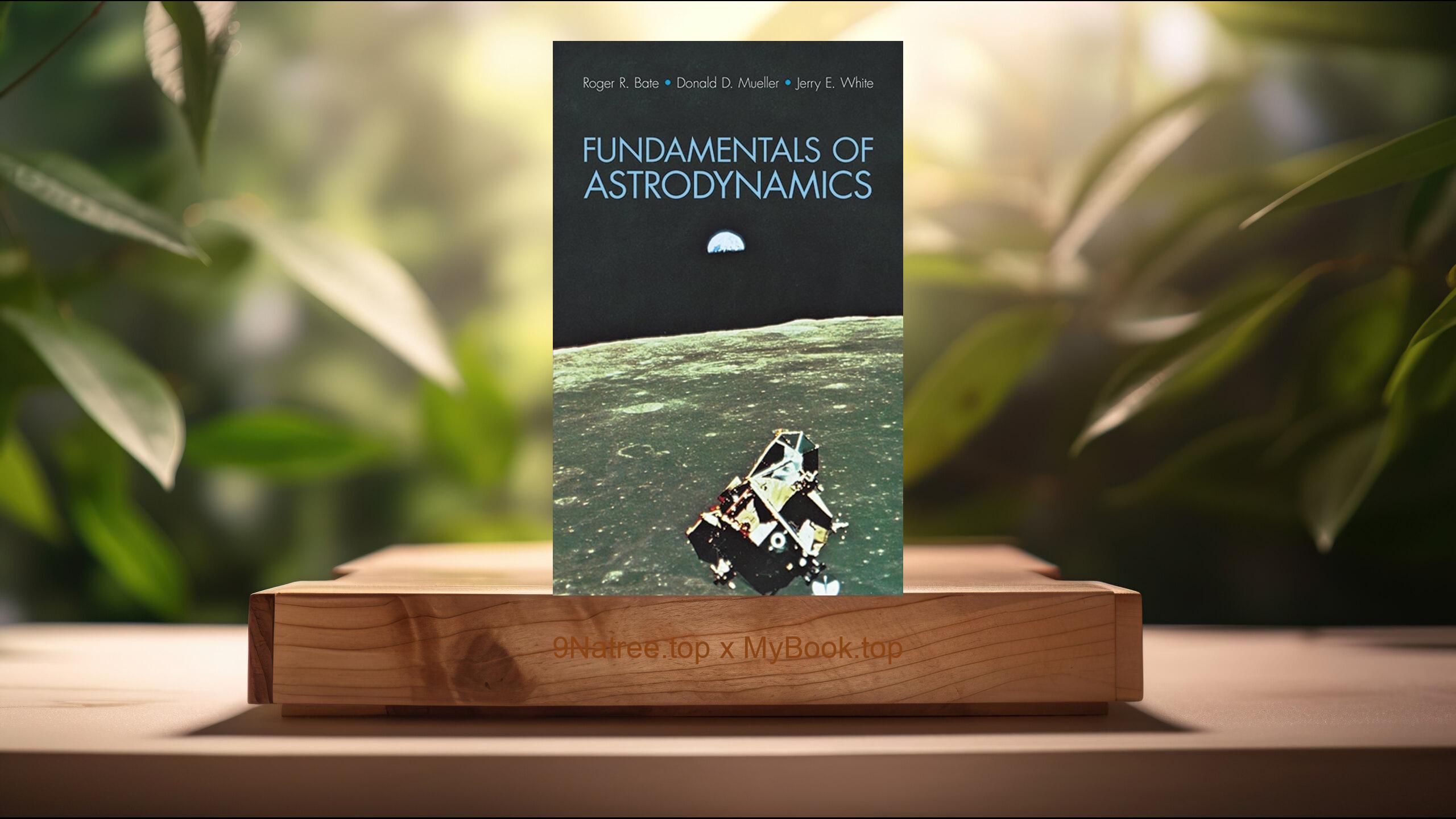
Fundamentals of Astrodynamics: Second Edition (Roger R. Bate)
- Amazon USA Store: https://www.amazon.com/dp/0486497046?tag=9natree-20
- Amazon Worldwide Store: https://global.buys.trade/Fundamentals-of-Astrodynamics%3A-Second-Edition-Roger-R-Bate.html
- eBay: https://www.ebay.com/sch/i.html?_nkw=Fundamentals+of+Astrodynamics+Second+Edition+Roger+R+Bate+&mkcid=1&mkrid=711-53200-19255-0&siteid=0&campid=5339060787&customid=9natree&toolid=10001&mkevt=1
- Read more: https://english.9natree.com/read/0486497046/
#orbitalmechanics #twobodyproblem #Keplerianorbits #Lamberttransfer #spacecraftmaneuvers #orbitelements #perturbations #astrodynamicstextbook #FundamentalsofAstrodynamics
These are takeaways from this book.
Firstly, Foundations: vectors, reference frames, and the language of orbital motion, A major strength of the book is how it grounds astrodynamics in a consistent mathematical framework. Spaceflight problems live or die on definitions: position and velocity vectors, coordinate systems, and the transformations that connect measurements to models. The text emphasizes the geometry of motion in three dimensions and the disciplined use of vector algebra and calculus. By focusing early on reference frames and time varying coordinates, the reader learns to avoid common mistakes such as mixing inertial and rotating frames or misinterpreting angular quantities. This foundation supports later topics like tracking, guidance, and orbit determination, where the same state vector must be expressed in different frames depending on the sensor or the dynamical model. The book also introduces the standard orbital description used in engineering, preparing the reader to translate between physical intuition and numerical representation. For students, this section clarifies why astrodynamics is not just plugging numbers into equations but constructing a consistent description of motion. For practitioners, it serves as a checklist for setting up analyses that can be trusted when the mission depends on precise geometry and timing.
Secondly, Two body dynamics and conic section orbits as the baseline model, The core of classical astrodynamics is the two body problem, where a spacecraft moves under the gravity of a single central body. Bate treats this model as the baseline from which most practical work begins. The text develops the equations of motion, conserved quantities such as energy and angular momentum, and the resulting conic section trajectories: ellipses, parabolas, and hyperbolas. This framework explains why orbital shapes and speeds are linked, how periapsis and apoapsis arise, and how escape and capture relate to specific mechanical energy. The reader is guided toward the engineering view of orbits as predictable curves characterized by a small set of parameters, which later become the orbital elements used for design and communication. Even when real missions include multiple bodies and perturbations, the two body solution remains the starting point for planning maneuvers, estimating delta v, and interpreting tracking data. By mastering the two body model, readers gain the ability to sanity check more complex numerical outputs and to understand which features of a trajectory come from fundamental mechanics versus from environmental complications or control inputs.
Thirdly, Orbit elements, state vectors, and converting between descriptions, Space missions require seamless translation between different ways of describing the same orbit. The book highlights the relationship between a Cartesian state vector, position and velocity at a given time, and the set of orbital elements that encode size, shape, and orientation. This topic is essential because planning often begins with elements, while navigation and simulation frequently operate on state vectors. The reader learns what each element means physically, how the orbital plane is oriented in space, and how argument and longitude angles locate the orbit relative to a reference direction. The text also develops the practical mathematics needed to compute elements from a state vector and to reconstruct a state vector from elements. These conversions are not merely academic: they underpin mission design trade studies, covariance interpretation in orbit determination, and operational tasks such as validating an ephemeris or building initial conditions for propagation. By emphasizing procedure and clarity, the book helps readers understand where numerical sensitivity can arise, for example in near circular or near equatorial cases, and why careful handling of angles and singularities matters in real engineering workflows.
Fourthly, Time of flight, Kepler propagation, and solving the trajectory connection problem, A recurring challenge in astrodynamics is predicting where a spacecraft will be after a certain time, or determining what orbit connects two positions in a given time. Bate develops the classical propagation tools associated with Keplerian motion, including the time of flight relationships that connect geometry to timing. This material supports both forward propagation and the inverse problems that appear in targeting and rendezvous planning. Closely related is the trajectory connection problem often associated with Lambert style formulations, where two position vectors and a time interval define a transfer orbit. While real mission planning uses numerical solvers and high fidelity force models, the Kepler based approach is still foundational because it provides fast estimates, good initial guesses, and insight into multiple solution branches. Readers learn to think in terms of constraints, boundary conditions, and the interplay between energy level and flight time. The practical payoff is the ability to frame mission design questions correctly: whether a transfer is feasible, how sensitive it is to timing, and what kinds of orbits are implied by the required geometry. This topic bridges pure orbital mechanics and the engineering of getting from here to there on schedule.
Lastly, Maneuvers, perturbations, and the move from idealized orbits to mission reality, No spacecraft flies a perfect two body trajectory for long. The book addresses how real missions modify and deviate from ideal motion through maneuvers and perturbing forces. On the maneuver side, it develops the logic of impulsive velocity changes and the resulting changes in orbit size, shape, and orientation. This provides the conceptual basis for transfer planning, plane changes, and staging strategies, with an emphasis on delta v as a primary cost metric. On the perturbation side, the text introduces why orbits drift and precess due to effects such as nonspherical gravity, third body influences, and other small accelerations that accumulate over time. Even if later work uses numerical integration and modern software, understanding perturbations qualitatively and quantitatively is essential for predicting long term behavior, maintaining ground track requirements, and designing station keeping budgets. The key theme is modeling: when the two body approximation is adequate, when it fails, and how to incorporate additional forces without losing analytical control. This topic prepares readers to interpret real ephemerides, understand why operational orbits require maintenance, and appreciate the trade offs between model complexity, computational effort, and required accuracy.
- Amazon USA Store: https://www.amazon.com/dp/0486497046?tag=9natree-20
- Amazon Worldwide Store: https://global.buys.trade/Fundamentals-of-Astrodynamics%3A-Second-Edition-Roger-R-Bate.html
- eBay: https://www.ebay.com/sch/i.html?_nkw=Fundamentals+of+Astrodynamics+Second+Edition+Roger+R+Bate+&mkcid=1&mkrid=711-53200-19255-0&siteid=0&campid=5339060787&customid=9natree&toolid=10001&mkevt=1
- Read more: https://english.9natree.com/read/0486497046/
#orbitalmechanics #twobodyproblem #Keplerianorbits #Lamberttransfer #spacecraftmaneuvers #orbitelements #perturbations #astrodynamicstextbook #FundamentalsofAstrodynamics
These are takeaways from this book.
Firstly, Foundations: vectors, reference frames, and the language of orbital motion, A major strength of the book is how it grounds astrodynamics in a consistent mathematical framework. Spaceflight problems live or die on definitions: position and velocity vectors, coordinate systems, and the transformations that connect measurements to models. The text emphasizes the geometry of motion in three dimensions and the disciplined use of vector algebra and calculus. By focusing early on reference frames and time varying coordinates, the reader learns to avoid common mistakes such as mixing inertial and rotating frames or misinterpreting angular quantities. This foundation supports later topics like tracking, guidance, and orbit determination, where the same state vector must be expressed in different frames depending on the sensor or the dynamical model. The book also introduces the standard orbital description used in engineering, preparing the reader to translate between physical intuition and numerical representation. For students, this section clarifies why astrodynamics is not just plugging numbers into equations but constructing a consistent description of motion. For practitioners, it serves as a checklist for setting up analyses that can be trusted when the mission depends on precise geometry and timing.
Secondly, Two body dynamics and conic section orbits as the baseline model, The core of classical astrodynamics is the two body problem, where a spacecraft moves under the gravity of a single central body. Bate treats this model as the baseline from which most practical work begins. The text develops the equations of motion, conserved quantities such as energy and angular momentum, and the resulting conic section trajectories: ellipses, parabolas, and hyperbolas. This framework explains why orbital shapes and speeds are linked, how periapsis and apoapsis arise, and how escape and capture relate to specific mechanical energy. The reader is guided toward the engineering view of orbits as predictable curves characterized by a small set of parameters, which later become the orbital elements used for design and communication. Even when real missions include multiple bodies and perturbations, the two body solution remains the starting point for planning maneuvers, estimating delta v, and interpreting tracking data. By mastering the two body model, readers gain the ability to sanity check more complex numerical outputs and to understand which features of a trajectory come from fundamental mechanics versus from environmental complications or control inputs.
Thirdly, Orbit elements, state vectors, and converting between descriptions, Space missions require seamless translation between different ways of describing the same orbit. The book highlights the relationship between a Cartesian state vector, position and velocity at a given time, and the set of orbital elements that encode size, shape, and orientation. This topic is essential because planning often begins with elements, while navigation and simulation frequently operate on state vectors. The reader learns what each element means physically, how the orbital plane is oriented in space, and how argument and longitude angles locate the orbit relative to a reference direction. The text also develops the practical mathematics needed to compute elements from a state vector and to reconstruct a state vector from elements. These conversions are not merely academic: they underpin mission design trade studies, covariance interpretation in orbit determination, and operational tasks such as validating an ephemeris or building initial conditions for propagation. By emphasizing procedure and clarity, the book helps readers understand where numerical sensitivity can arise, for example in near circular or near equatorial cases, and why careful handling of angles and singularities matters in real engineering workflows.
Fourthly, Time of flight, Kepler propagation, and solving the trajectory connection problem, A recurring challenge in astrodynamics is predicting where a spacecraft will be after a certain time, or determining what orbit connects two positions in a given time. Bate develops the classical propagation tools associated with Keplerian motion, including the time of flight relationships that connect geometry to timing. This material supports both forward propagation and the inverse problems that appear in targeting and rendezvous planning. Closely related is the trajectory connection problem often associated with Lambert style formulations, where two position vectors and a time interval define a transfer orbit. While real mission planning uses numerical solvers and high fidelity force models, the Kepler based approach is still foundational because it provides fast estimates, good initial guesses, and insight into multiple solution branches. Readers learn to think in terms of constraints, boundary conditions, and the interplay between energy level and flight time. The practical payoff is the ability to frame mission design questions correctly: whether a transfer is feasible, how sensitive it is to timing, and what kinds of orbits are implied by the required geometry. This topic bridges pure orbital mechanics and the engineering of getting from here to there on schedule.
Lastly, Maneuvers, perturbations, and the move from idealized orbits to mission reality, No spacecraft flies a perfect two body trajectory for long. The book addresses how real missions modify and deviate from ideal motion through maneuvers and perturbing forces. On the maneuver side, it develops the logic of impulsive velocity changes and the resulting changes in orbit size, shape, and orientation. This provides the conceptual basis for transfer planning, plane changes, and staging strategies, with an emphasis on delta v as a primary cost metric. On the perturbation side, the text introduces why orbits drift and precess due to effects such as nonspherical gravity, third body influences, and other small accelerations that accumulate over time. Even if later work uses numerical integration and modern software, understanding perturbations qualitatively and quantitatively is essential for predicting long term behavior, maintaining ground track requirements, and designing station keeping budgets. The key theme is modeling: when the two body approximation is adequate, when it fails, and how to incorporate additional forces without losing analytical control. This topic prepares readers to interpret real ephemerides, understand why operational orbits require maintenance, and appreciate the trade offs between model complexity, computational effort, and required accuracy.