Show Notes
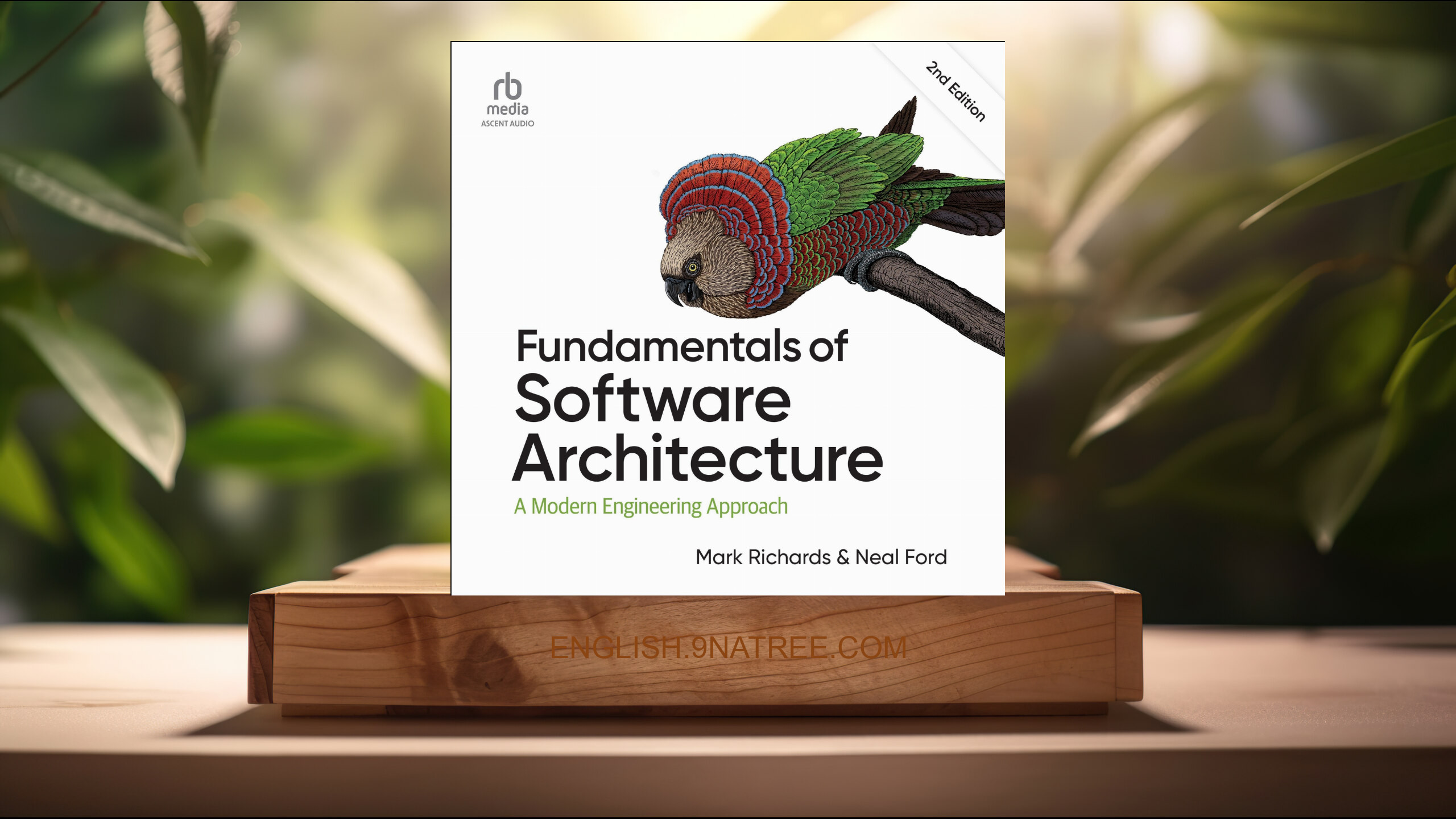
Fundamentals of Software Architecture : A Modern Engineering Approach (Neal Ford)
- Amazon USA Store: https://www.amazon.com/dp/B0F6ZNZDG1?tag=9natree-20
- Amazon Worldwide Store: https://global.buys.trade/Fundamentals-of-Software-Architecture-%3A-A-Modern-Engineering-Approach-Neal-Ford.html
- Apple Books: https://books.apple.com/us/audiobook/fundamentals-of-software-architecture-a/id1810481901?itsct=books_box_link&itscg=30200&ls=1&at=1001l3bAw&ct=9natree
- eBay: https://www.ebay.com/sch/i.html?_nkw=Fundamentals+of+Software+Architecture+A+Modern+Engineering+Approach+Neal+Ford+&mkcid=1&mkrid=711-53200-19255-0&siteid=0&campid=5339060787&customid=9natree&toolid=10001&mkevt=1
- Read more: https://english.9natree.com/read/B0F6ZNZDG1/
#Architecturalcharacteristics #Modularmonoliths #Componentcouplingandcohesion #Architecturegovernance #Eventdrivenarchitecture #FundamentalsofSoftwareArchitecture
Fundamentals of Software Architecture, Second Edition, is a technical guide to the practice of designing and governing software systems. Written by Mark Richards and Neal Ford, it treats architecture not as a collection of fashionable diagrams or a fixed senior job title, but as a discipline of making consequential trade-offs under changing constraints. The revised edition updates the original modern engineering perspective with expanded treatment of modular monoliths, microservices, event-driven systems, data, team topologies, cloud concerns, and generative AI. Its scope is deliberately broader than a catalog of architecture patterns. The book connects system structure to architectural characteristics such as performance, reliability, deployability, scalability, security, and maintainability; then relates those characteristics to components, teams, decisions, and governance. The intended reader is a developer moving toward architectural responsibility, an accidental architect, or an experienced practitioner seeking a structured vocabulary for evaluating choices. Across technology stacks, the central purpose is to make architectural reasoning more explicit, measurable, communicable, and repeatable.