![[Review] The 20-Minute Networking Meeting - Executive Edition (Marcia Ballinger) Summarized](https://episodes.castos.com/660078c6833215-59505987/images/2336842/c1a-085k3-qd1o5jx1ak1o-2nhucs.jpg)
Show Notes
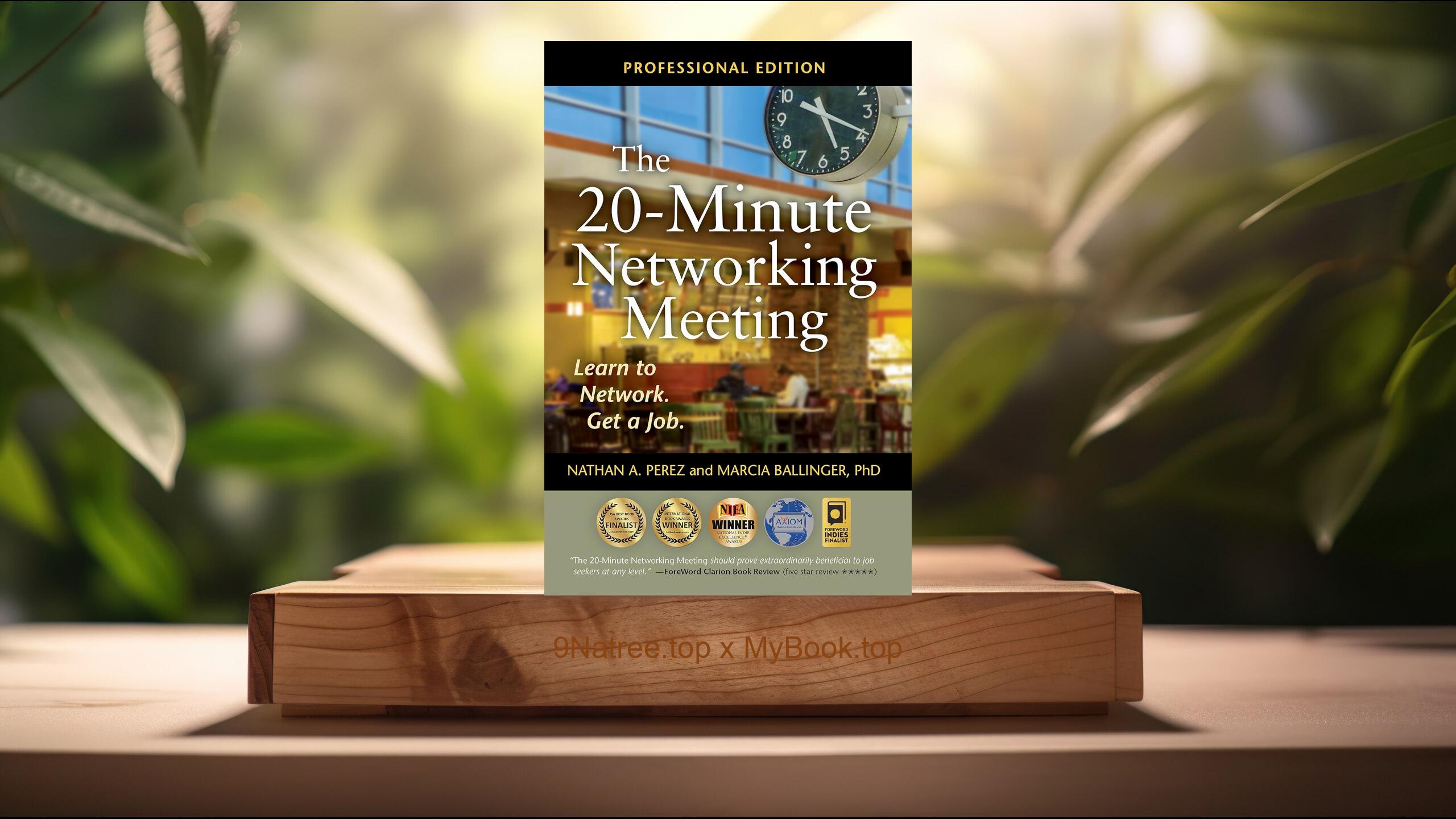
The 20-Minute Networking Meeting - Executive Edition (Marcia Ballinger)
- Amazon USA Store: https://www.amazon.com/dp/B008MH1XWC?tag=9natree-20
- Amazon Worldwide Store: https://global.buys.trade/The-20-Minute-Networking-Meeting---Executive-Edition-Marcia-Ballinger.html
- Apple Books: https://books.apple.com/us/audiobook/the-guest-list/id1500643836?itsct=books_box_link&itscg=30200&ls=1&at=1001l3bAw&ct=9natree
- eBay: https://www.ebay.com/sch/i.html?_nkw=The+20+Minute+Networking+Meeting+Executive+Edition+Marcia+Ballinger+&mkcid=1&mkrid=711-53200-19255-0&siteid=0&campid=5339060787&customid=9natree&toolid=10001&mkevt=1
- Read more: https://mybook.top/read/B008MH1XWC/
#executivenetworking #jobsearchstrategy #informationalinterviews #careertransition #professionalrelationships #The20MinuteNetworkingMeetingExecutiveEdition
These are takeaways from this book.
Firstly, Networking as a disciplined 20-minute conversation, A central theme is redefining networking from vague relationship building into a focused meeting format that can be repeated and improved. The 20-minute networking meeting is presented as a time-boxed conversation with a clear purpose: learn, connect, and position yourself for next steps. By limiting the duration, the method becomes easier to request and easier for a contact to accept, which matters even more at executive levels where schedules are tight. The approach encourages readers to set an agenda that balances professionalism with warmth, so the interaction feels valuable rather than self-serving. Readers are nudged to think like a consultant in the meeting: arrive prepared, listen carefully, and leave with actionable information. The structure also reduces anxiety for people who dislike traditional networking events because it replaces small talk with a purposeful interview-style exchange. Executives and senior candidates benefit because the format respects status and time while still enabling depth through smart questions. The meeting is not positioned as a one-off pitch but as one node in a broader relationship map, where a strong first conversation can lead to referrals, introductions, and ongoing dialogue.
Secondly, Preparation that signals credibility and intent, The book emphasizes that outcomes are won before the meeting begins. Preparation includes researching the person, their organization, and relevant industry context so the conversation can start at a higher level. Rather than showing up with generic questions, readers are encouraged to craft a short, clear statement of who they are, what they are exploring, and why they chose this contact. This is especially important for executive networking, where peers quickly assess clarity of thinking, strategic fit, and professionalism. Preparation also includes choosing meeting goals that are realistic for a first conversation, such as gathering market intelligence, understanding hiring patterns, or identifying decision makers, not asking directly for a job. Readers learn to anticipate what the other person might value, such as insights, connections, or a well-framed problem worth discussing. The process makes networking feel less like asking for favors and more like curating a mutually useful exchange. Another preparation element is logistics and etiquette: selecting the right channel, making respectful requests, and confirming details. These steps build trust, reduce friction, and set the tone for a conversation that feels efficient and meaningful.
Thirdly, Running the meeting: questions, listening, and positioning, During the meeting, the book focuses on execution: how to guide a short conversation without dominating it. A key tactic is using questions that invite specific, experience-based answers, which helps the reader learn how the industry works and how hiring decisions actually get made. This information advantage can be decisive for job seekers and for executives considering a transition. Listening is treated as a strategic skill, not passive politeness, because it surfaces needs, constraints, and opportunities that a prepared monologue would miss. The reader is encouraged to position their experience through concise, relevant examples rather than lengthy career history, aligning their strengths with themes raised by the contact. The goal is to leave the other person with a clear mental picture of the readers capabilities and direction. The meeting also covers how to handle delicate moments, such as being asked what you want, explaining a career change, or addressing gaps without oversharing. The tone aims for confident humility: direct about goals, respectful about the other persons time, and curious about their perspective. The meeting ends with clarity, including agreed next steps, potential introductions, and the best way to stay in touch.
Fourthly, Following up to convert conversations into momentum, The book treats follow-up as the differentiator between networking that feels nice and networking that produces results. A concise thank-you message is only the start; the reader is encouraged to capture what was learned, act on advice, and report back in a way that shows reliability. This builds a reputation for follow-through, which is crucial at senior levels where trust is currency. Follow-up also includes requesting introductions in a respectful, low-friction way, making it easy for the contact to say yes without feeling used. The method encourages readers to track interactions, maintain a simple system, and nurture relationships over time rather than only when they need something. This long view turns a job search tactic into a career asset. Another emphasis is offering value back, such as sharing relevant information, connecting people, or highlighting an insight that helps the contact. These small reciprocations change the dynamic from solicitation to partnership. The book implies that repeated 20-minute meetings, paired with disciplined follow-through, create a compounding effect: broader networks, better market intelligence, and greater access to opportunities that rarely reach public job postings.
Lastly, Executive-level strategy: brand, influence, and hidden opportunities, The Executive Edition angle highlights how senior professionals must network differently from early-career candidates. Executives are often evaluated on leadership narrative, strategic thinking, and cultural fit, so the book centers on refining a professional brand that feels coherent across conversations. Networking becomes a channel for influence as much as for employment: shaping how others describe you when your name comes up in closed-door discussions. The book encourages readers to understand the hidden job market, where roles emerge through restructuring, succession planning, and confidential searches, and where relationships and reputation play a major role. It also suggests using networking to test assumptions, validate target roles, and identify problems organizations are trying to solve, so the executive can position themselves as a solution. Another strategic element is selecting the right networking targets: not just recruiters, but industry peers, board-adjacent contacts, functional leaders, and connectors who bridge communities. The 20-minute format supports this strategy because it allows breadth without sacrificing professionalism. Overall, the topic underscores that networking is not a last resort but an ongoing leadership practice, helping executives stay visible, informed, and ready to move when the right opportunity appears.
- Amazon USA Store: https://www.amazon.com/dp/B008MH1XWC?tag=9natree-20
- Amazon Worldwide Store: https://global.buys.trade/The-20-Minute-Networking-Meeting---Executive-Edition-Marcia-Ballinger.html
- Apple Books: https://books.apple.com/us/audiobook/the-guest-list/id1500643836?itsct=books_box_link&itscg=30200&ls=1&at=1001l3bAw&ct=9natree
- eBay: https://www.ebay.com/sch/i.html?_nkw=The+20+Minute+Networking+Meeting+Executive+Edition+Marcia+Ballinger+&mkcid=1&mkrid=711-53200-19255-0&siteid=0&campid=5339060787&customid=9natree&toolid=10001&mkevt=1
- Read more: https://mybook.top/read/B008MH1XWC/
#executivenetworking #jobsearchstrategy #informationalinterviews #careertransition #professionalrelationships #The20MinuteNetworkingMeetingExecutiveEdition
These are takeaways from this book.
Firstly, Networking as a disciplined 20-minute conversation, A central theme is redefining networking from vague relationship building into a focused meeting format that can be repeated and improved. The 20-minute networking meeting is presented as a time-boxed conversation with a clear purpose: learn, connect, and position yourself for next steps. By limiting the duration, the method becomes easier to request and easier for a contact to accept, which matters even more at executive levels where schedules are tight. The approach encourages readers to set an agenda that balances professionalism with warmth, so the interaction feels valuable rather than self-serving. Readers are nudged to think like a consultant in the meeting: arrive prepared, listen carefully, and leave with actionable information. The structure also reduces anxiety for people who dislike traditional networking events because it replaces small talk with a purposeful interview-style exchange. Executives and senior candidates benefit because the format respects status and time while still enabling depth through smart questions. The meeting is not positioned as a one-off pitch but as one node in a broader relationship map, where a strong first conversation can lead to referrals, introductions, and ongoing dialogue.
Secondly, Preparation that signals credibility and intent, The book emphasizes that outcomes are won before the meeting begins. Preparation includes researching the person, their organization, and relevant industry context so the conversation can start at a higher level. Rather than showing up with generic questions, readers are encouraged to craft a short, clear statement of who they are, what they are exploring, and why they chose this contact. This is especially important for executive networking, where peers quickly assess clarity of thinking, strategic fit, and professionalism. Preparation also includes choosing meeting goals that are realistic for a first conversation, such as gathering market intelligence, understanding hiring patterns, or identifying decision makers, not asking directly for a job. Readers learn to anticipate what the other person might value, such as insights, connections, or a well-framed problem worth discussing. The process makes networking feel less like asking for favors and more like curating a mutually useful exchange. Another preparation element is logistics and etiquette: selecting the right channel, making respectful requests, and confirming details. These steps build trust, reduce friction, and set the tone for a conversation that feels efficient and meaningful.
Thirdly, Running the meeting: questions, listening, and positioning, During the meeting, the book focuses on execution: how to guide a short conversation without dominating it. A key tactic is using questions that invite specific, experience-based answers, which helps the reader learn how the industry works and how hiring decisions actually get made. This information advantage can be decisive for job seekers and for executives considering a transition. Listening is treated as a strategic skill, not passive politeness, because it surfaces needs, constraints, and opportunities that a prepared monologue would miss. The reader is encouraged to position their experience through concise, relevant examples rather than lengthy career history, aligning their strengths with themes raised by the contact. The goal is to leave the other person with a clear mental picture of the readers capabilities and direction. The meeting also covers how to handle delicate moments, such as being asked what you want, explaining a career change, or addressing gaps without oversharing. The tone aims for confident humility: direct about goals, respectful about the other persons time, and curious about their perspective. The meeting ends with clarity, including agreed next steps, potential introductions, and the best way to stay in touch.
Fourthly, Following up to convert conversations into momentum, The book treats follow-up as the differentiator between networking that feels nice and networking that produces results. A concise thank-you message is only the start; the reader is encouraged to capture what was learned, act on advice, and report back in a way that shows reliability. This builds a reputation for follow-through, which is crucial at senior levels where trust is currency. Follow-up also includes requesting introductions in a respectful, low-friction way, making it easy for the contact to say yes without feeling used. The method encourages readers to track interactions, maintain a simple system, and nurture relationships over time rather than only when they need something. This long view turns a job search tactic into a career asset. Another emphasis is offering value back, such as sharing relevant information, connecting people, or highlighting an insight that helps the contact. These small reciprocations change the dynamic from solicitation to partnership. The book implies that repeated 20-minute meetings, paired with disciplined follow-through, create a compounding effect: broader networks, better market intelligence, and greater access to opportunities that rarely reach public job postings.
Lastly, Executive-level strategy: brand, influence, and hidden opportunities, The Executive Edition angle highlights how senior professionals must network differently from early-career candidates. Executives are often evaluated on leadership narrative, strategic thinking, and cultural fit, so the book centers on refining a professional brand that feels coherent across conversations. Networking becomes a channel for influence as much as for employment: shaping how others describe you when your name comes up in closed-door discussions. The book encourages readers to understand the hidden job market, where roles emerge through restructuring, succession planning, and confidential searches, and where relationships and reputation play a major role. It also suggests using networking to test assumptions, validate target roles, and identify problems organizations are trying to solve, so the executive can position themselves as a solution. Another strategic element is selecting the right networking targets: not just recruiters, but industry peers, board-adjacent contacts, functional leaders, and connectors who bridge communities. The 20-minute format supports this strategy because it allows breadth without sacrificing professionalism. Overall, the topic underscores that networking is not a last resort but an ongoing leadership practice, helping executives stay visible, informed, and ready to move when the right opportunity appears.